Rwanda is blessed with abundant layers of history envisaged through cultural, natural or mixed (natural & cultural) heritage sites. The country has got more than 530 heritage sites as per the research carried out in 2006 by INMR (and now RCHA). Another field research survey was conducted from 2016 to 2018 to identify the sites, collect and transcript the oral traditions and other sources of information: archaeological, written, audio-visual, and about 107 sites were documented into a book, “Rwanda; Amateka y’ahantu Ndangamurage”, literally translated as, “Rwanda: The history of heritage places” (1st edition)
Rwandans share a common culture and history that is well rooted over centuries, and is part of their cherished heritage. Nevertheless, not all people are well aware of the existing physical/tangible attributes that showcase national heritage. A reason as to why Rwanda Cultural Heritage Academy (RCHA) has got the mandate to disseminate factual data and information to the general public about the historical, cultural, archaeological or natural heritage across the country.
It is also in line with the responsibilities of RCHA to educate and raise awareness of the public about the national heritage
1. Ethnographic Museum
https://ethnographic.rwandaheritage.gov.rw/
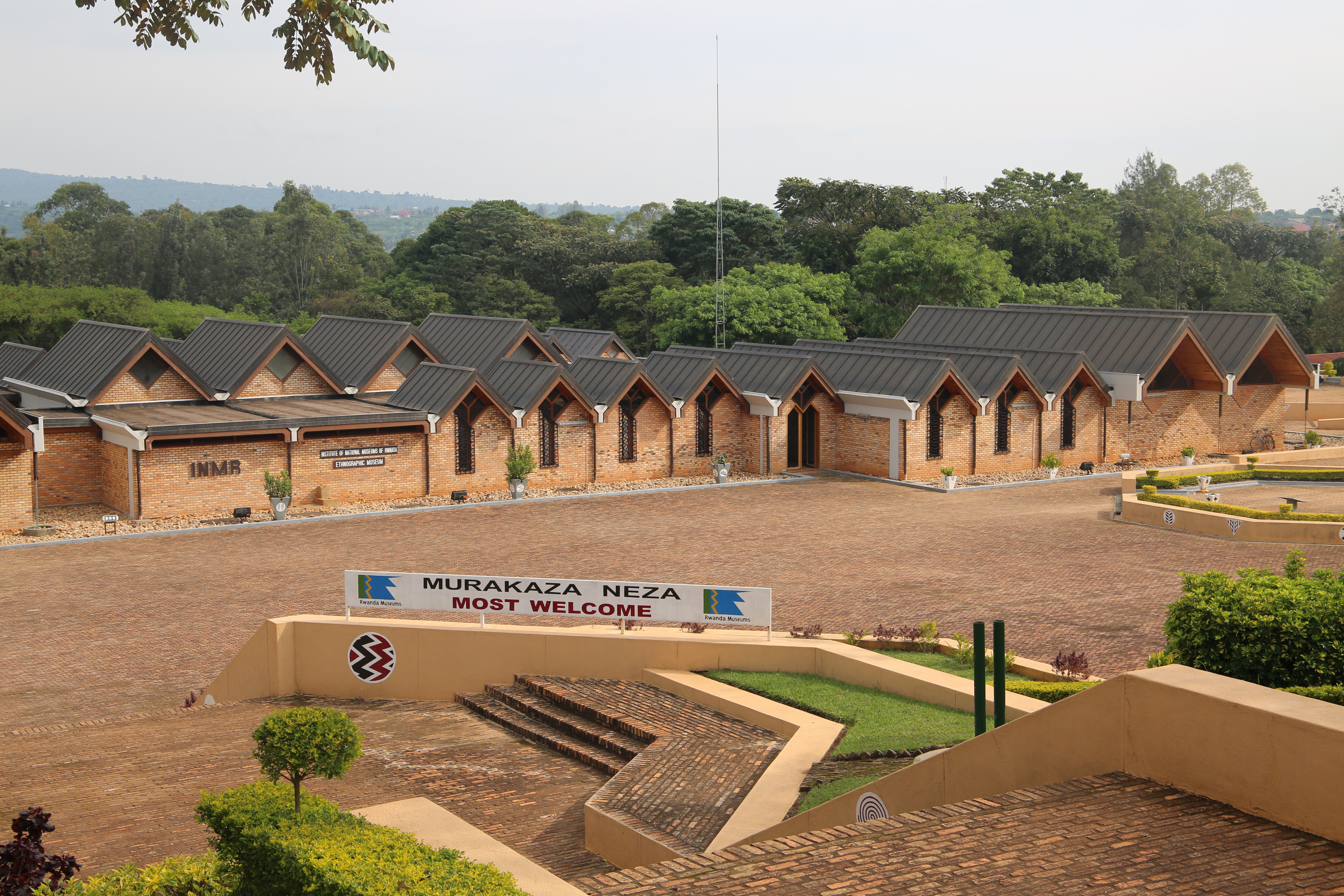
The Ethnographic Museum formerly known as National Museum of Rwanda is located in Huye District, Southern province. This Museum houses the finest ethnographic and archeological collections from East Africa with more than 10,000 artifacts. Captivating exhibitions of traditional artifacts are iluminated by fascinating selection of monochrome photographs taken at the turn-of-the-century, providing insight not only into pre-colonial lifestyles, but also into the Rwanda's later development as a modern African state. It orients you deeply into the social and cultural aspects of Rwanda.
2. Kings' Palace Museum (Rukari)

The Kings' Palace museum is located in Nyanza District, Southern Province, 88 Km from Kigali City. The King Mutara III Rudahigwa's former Palace was turned into a museum in May 2008. This Palace offers a detailed overview of the Rwandan monarchial system and its abolition in early 1960s due to colonialism. This palace was restored to its 19th century state as a replica and was made entirely with tradtional materials.
From 2011, the long horned royal cows "Inyambo" were introduced beacause cows form an integral part of Rwandan culture and were initially the King's symbol of prestige. Visitors are aluays fascinated by the procession of these royal cows wich are famous from their impressive long horns, height, gentle nature and the traditional pastoral poems.
Alonside the traditional palace, is the 1931 modern palace where King Mutara III Rudahigwa resided until he passed away in 1959. It now serves to display Rwandan history from the 15th century. On neighbouring hill Mwima, one can also visit the mausoleum where King Mutara III Rudahigwa, his wife Queen Rosalie Gicanda and King Kigeli V Ndahindurwa are laid to rest.
3. Kwigira Museum

Kwigira Museum-Rwesero is located on Rwesero hill in Nyanza District. The Museum building was orginally constructed to serve as the royal palace of King Mutara III Rudahigwa. Its contruction started in 1957 and was completed in 1958. The King however died on July 25th 1959 under mysterious circumstances before its inauguration. After his death, the building successvely housed several government entities: the supreme Court, the Court of Appeals, the Financial Court, and the Prosecuters General's Offices. Since 2006, the building was an Art Museum.
From the Rwandan context, the palace is unique in style, for its location and especially considering the time of its contruction. It is still considered by some as a piece of art, but also as the symbol of independence, dignity and self-reliance, values that characterised King Mutara III Rudahigwa, a National Hero. Reference to those significances, the building is the right house to host the first ever exhibition about the history and background of "Home Grown Initiatives" such as Gacaca, Abunzi, Umuganda, Ubudehe, Itorero, Girinka, Umushyikirano and Umwiherero.
4. Kandt House Museum

Kandt House Museum, the former Natural History Museum is located at KN 90 St, around one kilometer from downtown. This museum is formerly well known as Natural History Museum (NHM). Its name as NHM was changed into Kandt House Museum since December, 17th 2017.
At present, Kandt House Museum comprises three main parts:
-The first part presents Rwandan life in all its aspects (social, economic, and politically: monarchism) before the colonial period.
-In the second part, which is the biggest one, the museum traces experience of Rwandan people during the colonial period, more specifically under the German rule from 1884 (the time of Berlin conference), throughout colonial administration, World War I up to 1916, including Richard Kandt's life and his deeds in Rwanda.
-Another attractive gallery is the third part where the history of Kigali before colonial time, during an its founding as capital city, is well presented.
- Lats but not least, it is the only remaining mark of the former Natural Museum, a temporary exhibition of live snakes and baby crocodile. By visiting these external part, one can enjoy the view of the spectacular surroundings.
5. Museum for Campaign Against Genocide

The Museum for Campaign Against Genocide is located in the parliamentary building, in Kigali just 800m behind Kigali Convention Center roundbout, and just 4.9km, 9 minutes drive from Kigali International Airport. This Campaign Against Genocide Museum was opened officially on 13th December 2017 by H.E Paul Kagame, the President of the Republic of Rwanda.
CAG Museum is built in the parliamentary building which was once known as Conseil National de Developement. This building hosted the Rwandan Patriotic Front politicians and the 600 men protection force (3BN) from 28th December 1993 as they were in the preparations for the installation of Broad Based Transitional Government and the National Transitional Assembly and these 600 man protection force the (3BN) were the ones given the order first on 07/04/1994 by the RPA Chairman of High Command Major General Paul Kagame to break out from their initial positions defend themselves and rescue victims of Genocide in their vicinity when campaign against Genocide began.
CAG Museum depicts in details how the Campaign Against Genocide plan was executed by RPF/A following the withdrawal of UN troops leaving the targeted Tutsi under the mercy of the Genocidaires and how only the RPF/A forces who were in the war of liberation took the unilateral decision to stop Genocide, rescue victims of Genocide and defeat the Genocidal forces. This CAG Museum also has its outer parts comprised of bunkers, trenches, monuments including that of the 12.7 mm Machine Gun that helped in containing the advancing genocidal forces.
6. Rwanda Art Museum

Rwanda Art Museum (Kanombe) is located in 4 kilometers from Kigali International Airport. This former Presidential Palace Museum changed into Rwanda art Museum as of 18th May 2018.
The new museum displays cntemporary artworks produced by both Rwandan and international artists. The objective is to give our visitors a glimpse of the orginality of Rwandan creativity, the development of the arts of past centuries, whilst not overlooking traditional or modern imaginations.
A part from permanent exhibition, the Rwandan Art Museum hosts both temporary and moving exhibitions. Young visitors can also enjoy the Art Kids' Studio where they can practice their artistic skills. This museum is a place where artists can meet and exchange ideas. In this line, a room for them to exhibit their artworks has been provided by RCHA (Inteko y'Umuco) to their federation.
7. Museum of Environment
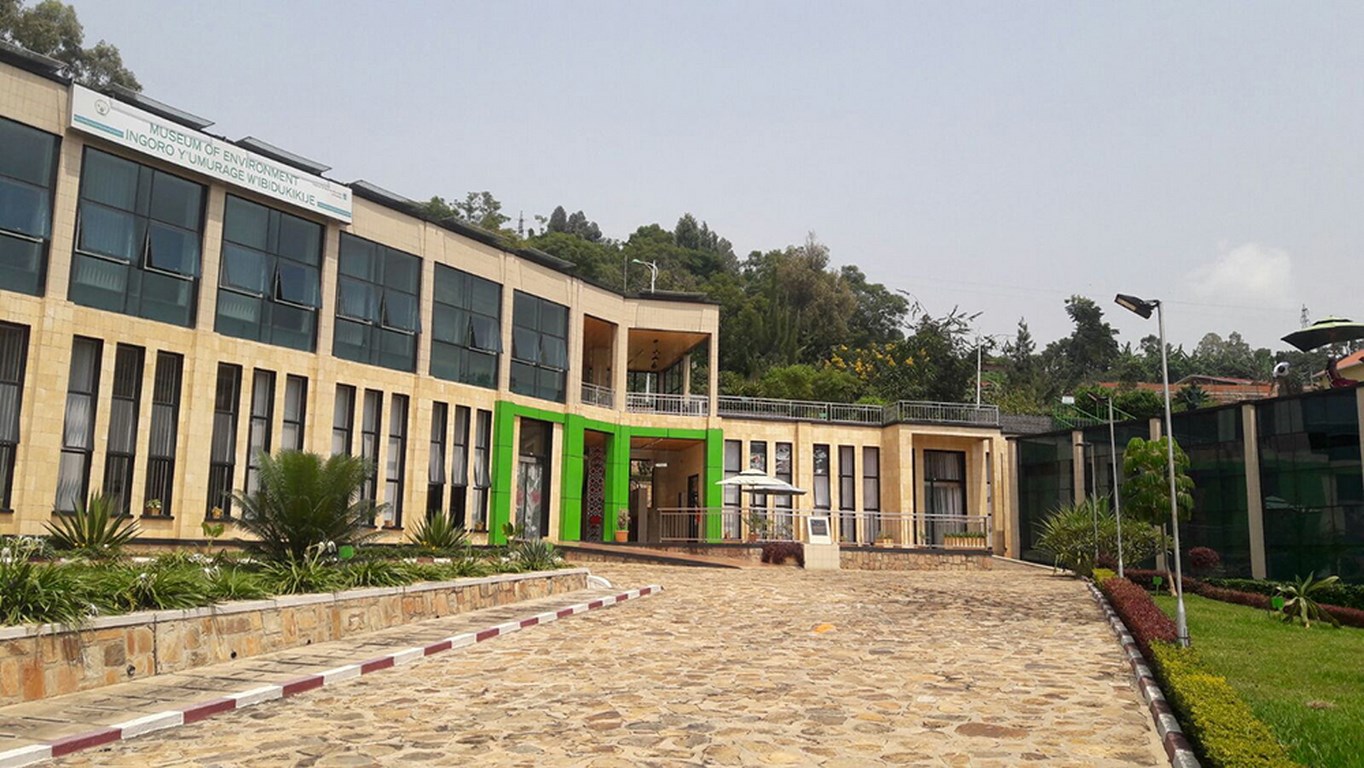
Museum of Environment is located in Karongi District-Western Province (at lake Kivu). This museum was officially inaugurated on July 16th 2015 and it is the only one of its kind in East Africa if not on the continent. The main objective of the Museum of Environment is to educate the public on how to keep good constructive relationship with their natural environment and to let them understand their responsibility in safeguarding the environment to ensure an integrated and sustainable development.
8. Rwanda Liberation Museum

Also known as Umulindi w'Intwari located in Gicumbi district, the Museum presents the country's history of the liberation struggle by Rwanda Patriotic Front (RPF Inkotanyi). Among many structures that facilitated the struggle and can be found at this museum, is the former bunker of RPA/RPF High Command Chief H.E. President Paul Kagame.
This Museum currently functions as an open-air museum.
MUSEUM ADMISSION FEES AND OTHER RELATED SERVICES
Please click here for information on prices: